
PARTS USED:
- Aerial parts
USES:
Anti-anxiety
Antidepressant benefits – works on serotonin receptors
Promotes a healthy sleep
CNS Health:
- Nootropic – Cognitive enhancer
- Neuroprotective
- Nerve growth – increases dendrite length and branching
- Nourishes neurons and balances the nervous system
- Improves processing speed – visual, learning, memory
- Protects against age-related structural deterioration
- Anticonvulsant synergist with anticonvulsant medications
- Anti-inflammatory
- May be beneficial in Alzheimer’s
- May be beneficial in Parkinson’s
Antioxidants
Anti-inflammatory – particularly in the brain
- Neuralgias
- Inhibits cytokine release
- Cleaves proteins associated with the development of Alzheimer’s
- Activates enzymes and inflammatory mediators
- Other anti-inflammatory actions
- Rheumatic conditions
- Arthritis/joint pain
May help reduce child and adolescent cognitive symptoms
- ADHD, mental retardation, learning disorders, and Autism spectrum disorders:
- Restlessness and attention
- Impulsiveness
- Self-control
- Inattention
- Reduced error-making
- Language and simple numeric skills
- Mental speed
- Improved recall
- Associative memory and relationships
May be good for constipation – increases intestinal motility
Cardiotonic
Reproductive
- Anti-fertility in males – reduces sperm motility and morphology (reversible)
Apoptosis
- Breast
- Brain
- Colon
PREPARATION:
- Infusion
- Tincture
SIDE EFFECTS AND TOXICITY:
- Brahmine (alkaloid) can be toxic in large doses
- Gastric irritation
- Nausea
- Cramping
- Increased intestinal motility
- Diarrhea
- May interact with Amitriptyline
- Do not use during pregnancy/lactation
- Source responsibly – it is a chelator
- Potential interaction when orally co-administered with drugs metabolized by CYP1A2, CYP3A4, CYP2C9 and CYP2C19 (some anticonvulsants, antidepressants, antibiotics, anti-anxieties).
MISCELLANEOUS:
- Also known as “Brahmi” in southern India (Centella is known as Brahmi in northern India)
- Named after “Brahman” meaning the “energy of universal consciousness”
- Considered an adaptogen in Ayurveda
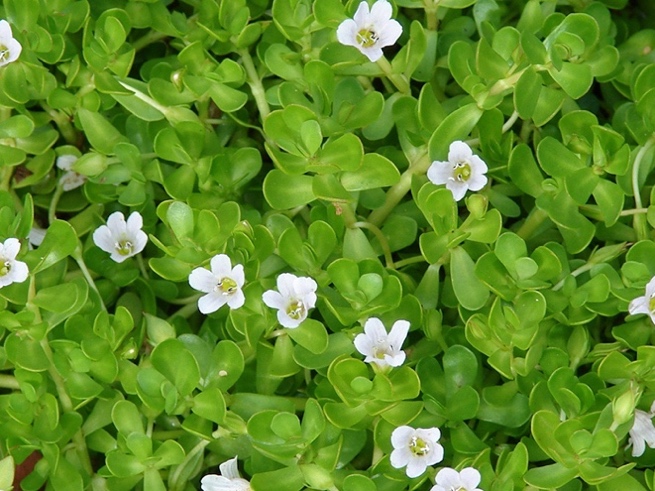
- Doctrine of Signatures suggests this plant is beneficial for the nerves, brain, and bloodflow, as it grows in a sprawling, branching pattern