
PARTS USED:
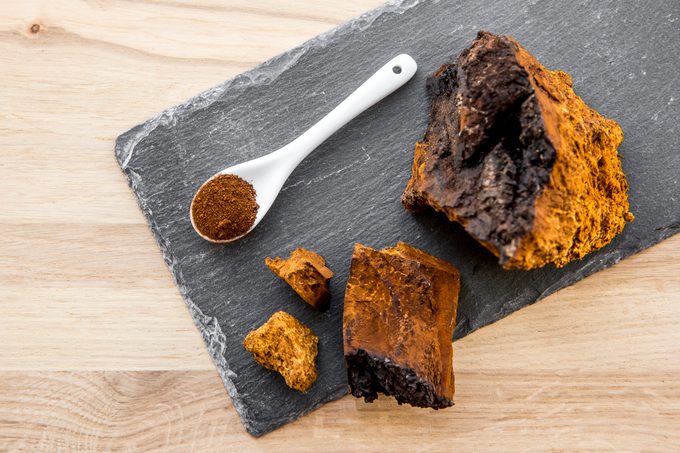
- Entire piece – outer black and orange inner layers
USES:
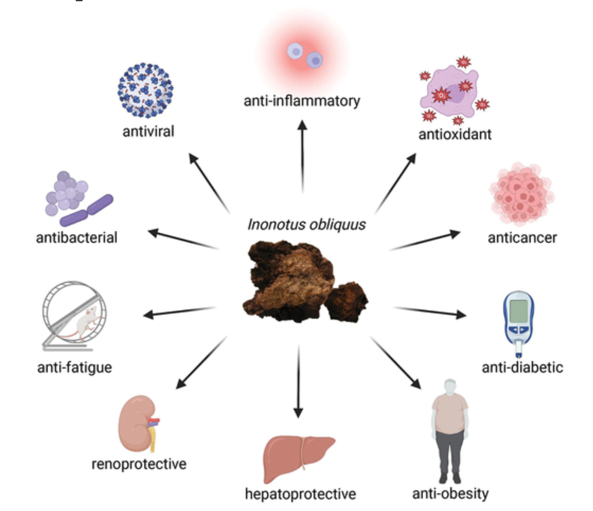
Antioxidant
- Activity is due to triterpenoids and other polyphenols (the polysaccharides have very little antioxidant activity); therefore, antioxidant action is best found in tincture form
- Scavenges free radicals; protects from oxidative stress
- Helps with DNA repair – anti-aging
Anti-inflammatory
Neuro
- Adaptogenic properties
- Helps cope with physical fatigue
- Reduces lactate and urea
- Increases mental sharpness
- Stress resistance
- Improves vitality, stamina
- Helps cope with physical fatigue
- Increases memory and learning ability
- Pain reliever
- Improves sleep
- Supports neural cell survival – good for Alzheimer’s
CV
- Reduces cholesterol (animal studies)
GI
- Prebiotic action
- Colitis, Diverticulitis, Crohn’s, Gastritis
- Protects against ulcerative damage caused by chemotherapy
- Increases the production of bile acids – helps clear cholesterol from the body
- Hepatoprotective
- Fibrosis
- Non-alcoholic fatty liver disease (NAFLD)
- Reduces triglyceride content
- Reduces ALT and AST levels
- Reduces lipid deposition
- Appetite suppressant (due to high fiber content)
- Possible anti-obesity agent – helps with glucose and triglyceride metabolism
- Possible anti-diabetic agent (animal and clinical studies)
- Improves glucose tolerance
- Restores hepatic glycogen levels
- Improves insulin resistance
GU
- Nephroprotective
- Diet-induced chronic kidney disease
- Restoration of renal function and alleviation of renal damage
MS
- Improves exercise endurance and stamina
- Reduces muscle fatigue
Repro
- Increases testosterone and sperm production (animal studies)
- Helps correct impaired reproductive function in men
Immune
- Antibacterial
- Gram-positive and Gram-negative bacteria – ethanol or aqueous extracts
- Staph aureus
- Antiviral
- Hepatitis C
- HIV
- Coronavirus (SARS, Covid)
- Herpes (early stage)
- Feline influenza
- Immune system enhancer
- Gram-positive and Gram-negative bacteria – ethanol or aqueous extracts
Oncology
- Suppresses oncogenic signals
- Reduces tumour genesis
- Apoptic and/or anti-proliferative effects
- Prostate
- Lung
- Liver
- Breast
- Colorectal
- Stomach
- Cervix
- Melanoma
- Reduces chemotherapy side effects
- Improves immunity and protection from side effects of chemotherapy
PREPARATION:
- Decoction
- Tincture
SIDE EFFECTS AND TOXICITY:
- High oxalate content –
- caution in kidney disease or propensity for kidney stones
- caution in those who have a propensity for calcium deposits throughout their body – joints, etc…
- …but as plants are wont to do, Chaga is also a calcium chelator! It helps to eliminate calcium from the body
- Caution in osteoporosis/menopausal women
- Caution in those who have not fully grown
- Caution in those with poor calcium intake
- May increase clotting time
- Stop taking prior to surgery
- Caution in those taking ASA or blood thinners
- Caution in those taking antidiabetics
- Caution in auto-immune conditions
MISCELLANEOUS:
- The name originates from the Russian word for mushroom, ‘czaga’
- Siberian and Chinese shamans refer to chaga as ‘the mushroom of immortality’
- Translates to ‘cancer polypore’ in Norwegian, where it is frequently used to treat cancers
- Has been used as a medicinal since the sixteenth century – often used for pipe smoking rituals and mystical practices such as predicting the future
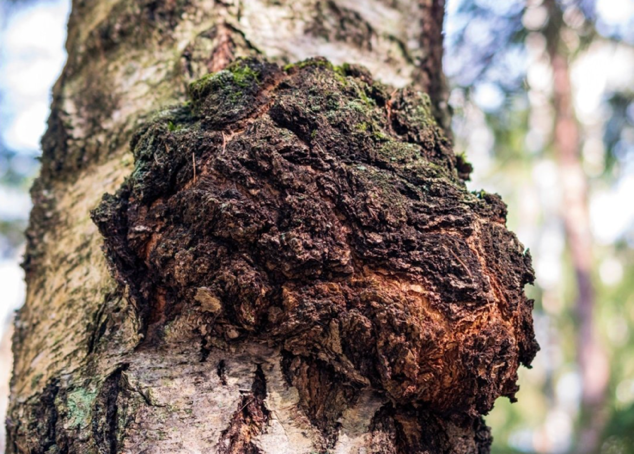
- Primarily inhabits the trunks of Birch trees, and sometimes Alder, Beech, and a few others
- Not actually a mushroom; it is a hardened ‘canker’ of dark woody tissue that is parasitic, and draws nutrients and constituents directly from the tree
- Neither plant nor animal, but its DNA is closer to human DNA than it is to plant DNA
- Even though Chaga is commonly referred to as a mushroom, it is actually a hardened mass – or “canker” – of dark woody tissue that grows on birch trees
- Aluminum chelator
- During WWII, Chaga was used as a coffee replacement in Finland, where coffee was scarce