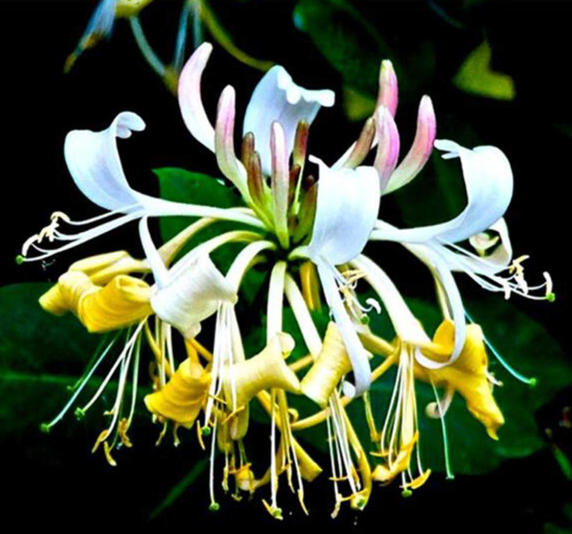

PARTS USED:
- Flowers (unopened – higher antibacterial content)
- Leaves
- Stems
USES:
This is a herb that is typically prescribed in combination with other herbs; to that effect, most research into japonica by itself is limited to pre-clinical studies (in vitro and animal)
Anti-inflammatory
Detoxification
- Liver
- Lymphatics
- Gout
Anodyne
Neuro
- Headaches
CV
- Coronary artery disease
- Atherosclerosis
- Hypotensive
- Lowers cholesterol
Respiratory
- Good for URTI’s especially when there is a sore throat and/or fever
- Colds, flus
- RSV
- Sinus infections
- Pneumonia
- Asthma, bronchitis
- Tonsillitis
- Coughs
- TB (human studies)
- Expectorant – thins mucous
- SARS, Covid
- Lung abscesses
GI
- Mouth ulcers
- Bacterial Dysentery
- Chronic enteritis
- Colitis
- Hepatoprotective – potentially hepato-reparative due to detox abilities
GU
- UTI’s
- Nephritis
Endocrine
- Metabolic Disorder – the Inositol can help regulate blood sugar; helps with diabetic complications (CV, Neuro, Renal, Eye)
MS
- Joint pain
- Arthritis
- Rheumatoid Arthritis
Integumentary – infusion used topically for
- Infected wounds
- Acne
- Rosacea
Immune
- Increases Natural Killer (NK) cell count
- Rebalances the immune system
- Helps reduce microbial-related fevers
- Clears up purulent discharge
- Conjunctivitis
- Sepsis
- In clinical trials for effectiveness against Leptospirosis
- Measles, mumps, meningitis, encephalitis
- Works against:
- Streptococcus
- Staphylococcus
- Salmonella
- coli
- Candida albicans
- Aspergillus
- Klebsiella
- Pseudomonas
- Influenza A
- H1N1
- RSV, SARS, Covid
- Herpes Simplex I
- Note: Antimicrobial effectiveness is best as a tincture and has been proven to be dose-dependent
Reproductive
- Dysmenorrhea (antispasmodic)
- Acute mastitis
Oncology
- Apoptosis, cell cycle interruptions, anti-angiogenic for cancers:
- Pancreatic
- Liver
- Cervical
- Lung
PREPARATION:
- Infusion
- Tincture
- Syrup
SIDE EFFECTS AND TOXICITY:
- Unknown risks for pregnancy and lactation
- Toxic only if taken in excessive quantity
- Stop at least 72 hours before surgery (may increase risk of bleeding)
MISCELLANEOUS:
- A favorite food of goats, hence the Latin family name, Caprifolium, meaning goat’s leaf
- Used for thousands of years in China – first listed in the Ming Yi Za Zhu (Miscellaneous Records of Famous Physicians) around 500 CE
- In 2003, Lonicera was the most widely used TCM herb within formulations treating the SARS outbreak in China; it was also one of the most-used herbs used during the Covid outbreak
- Invasive species known for its rapid growth – illegal to plant in Canada
- Large amounts of pesticides are found in the Lonicera from China – source your herbs wisely
- Pliny suggested Lonicera mixed with wine was good for spleen disorders
- Traditionally used in Europe as a remedy for asthma and chest disorders
- Uses in soups and made into wine to be used as a gargle/rinse
- Often seen in ingredients in throat lozenges
- One of the Bach Herbal Remedies – said to suppress feelings of nostalgia and homesickness
- The fragrance is said to induce dreams of passion and love – In Victorian England it was forbidden for young girls to bring honeysuckle into their homes for fear it would cause sexually aggressive dreams
- A symbol of fidelity and affection
- If a honeysuckle blossom is brought into the house, there will be a wedding within a year; also said to bring prosperity and money
- Will keep witches from entering your house if grown at the entrance