
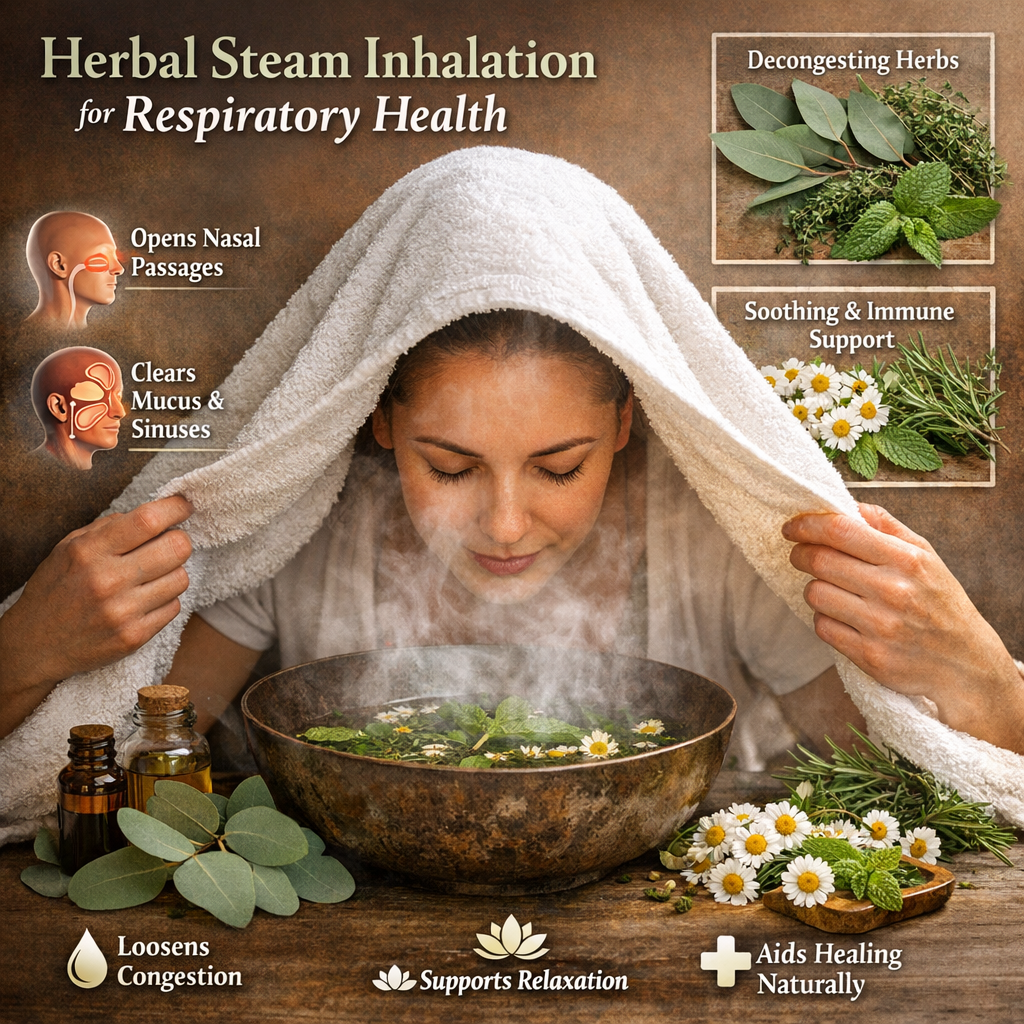

Upper respiratory infections are especially common during colder months and seasonal transitions. Congestion, sinus pressure, sore throat, coughing, and restricted breathing can make even simple daily activities feel exhausting. While the body is fully capable of resolving most upper respiratory infections naturally, herbal medicine offers simple, time-tested ways to ease discomfort and support recovery. One of the most effective and immediate methods is herbal steam inhalation.
Steam inhalation has been used in traditional healing systems across cultures for centuries. When combined with therapeutic herbs, it becomes far more than warm moisture — it becomes a direct, aromatic delivery system for plant medicine to the respiratory tract.
How Steam Inhalation Supports the Respiratory System
The respiratory tract is lined with mucous membranes that produce mucus as a protective barrier. During infection, inflammation increases and mucus often becomes thick and stagnant. This leads to congestion, sinus pressure, and difficulty breathing.
Warm steam gently hydrates and softens these membranes. The moisture helps loosen thick mucus, making it easier for the body to clear naturally. Improved mucus flow reduces pressure in the sinuses and allows the nasal passages to open more freely.
Heat also encourages local circulation in the upper respiratory tissues. Enhanced blood flow supports immune activity at the site of infection, helping the body respond efficiently. Many people experience immediate relief — breathing becomes deeper, sinus heaviness reduces, and irritation feels soothed.
When herbs are added, the benefits multiply.
Why Add Herbs to Steam?
Herbal steam inhalation allows volatile plant compounds to travel directly into the respiratory passages. These aromatic constituents interact with nasal tissues, sinuses, and the throat almost instantly.
Certain herbs are especially supportive during upper respiratory infections:
Eucalyptus (Eucalyptus globulus)
Rich in cineole, eucalyptus is renowned for its clearing and decongesting action. It helps open nasal passages, reduce sinus pressure, and promote easier breathing.
Thyme (Thymus vulgaris)
Thyme contains thymol, a powerful aromatic compound traditionally valued for supporting immune response and maintaining respiratory clarity.
Peppermint (Mentha x piperita)
The menthol in peppermint produces a cooling sensation while helping to reduce inflammation and calming irritated tissues.
Rosemary (Rosmarinus officinalis)
Stimulating and warming, rosemary enhances circulation and helps shift stagnant congestion.
Chamomile (Matricaria chamomilla)
Gentle and soothing, chamomile calms irritated tissues and supports inflamed sinuses or sore throats.
These herbs do not simply mask symptoms — they actively support the body’s natural clearing processes while providing noticeable comfort.
Benefits of Herbal Steam Inhalation
Herbal steam inhalations provide targeted, localized support. Because the herbs are inhaled directly, their actions focus precisely where discomfort is present. This makes the practice especially effective for:
- Nasal congestion
- Sinus pressure
- Thick mucus
- Throat irritation
- Dry indoor air discomfort
Many people experience rapid improvement in breathing comfort after just one session. The combination of warmth, moisture, and herbal aroma creates an environment where mucus loosens, tissues relax, and airflow improves.
Unlike suppressive approaches, herbal steam works with the body’s natural elimination process. When mucus moves freely, pressure decreases and the respiratory tract feels clearer.
The Nervous System Connection
Upper respiratory infections can disrupt sleep and increase physical tension. Congestion often causes shallow breathing, which may leave a person feeling tired and unrejuvenated.
By opening airways, steam inhalation before bed naturally encourages slower, deeper breathing. The aromatic herbs further enhance this effect by interacting with the olfactory system, which connects directly to the brain’s emotional and relaxation centers.
This is why herbal steam often feels calming as well as physically relieving. Relaxed breathing supports restorative sleep — and sleep is one of the most powerful tools for immune recovery.
How to Perform a Herbal Steam Inhalation
A proper herbal steam session is simple and effective:
- Add 1–2 tablespoons of dried herb (or a blend) to a bowl.
- Pour hot water over the herbs.
- Lean comfortably over the bowl and place a towel over your head to create a tent.
- Inhale gently for 5–10 minutes.
The steam should be warm and comfortable, never harsh. Sessions can be done once or twice daily during periods of congestion.
Consistency is key. Gentle daily support often produces better results than intense, sporadic treatment.
Herbal Wisdom in Modern Practice
Herbal steam inhalation is a beautiful example of how traditional medicine remains profoundly relevant today. It is simple, accessible, and deeply effective when done correctly. More importantly, it demonstrates how plant medicine can support the body directly, respectfully, and powerfully.
At The Herbal Clinic and Academy, herbal medicine is practiced with knowledge, precision, and individualized care. Choosing the right herbs, understanding proper preparation, and tailoring support to each person’s condition can significantly enhance results.
When used thoughtfully, herbal steam inhalation transforms an uncomfortable respiratory infection into an opportunity to actively support the body’s healing process. It is not merely a home remedy — it is a therapeutic practice rooted in centuries of botanical wisdom.
And when guided by a trained herbal professional, it becomes even more powerful. If you need herbal guidance for an upper respiratory infection, book a consultation with The Herbal Clinic and Academy today.


0 Comments