
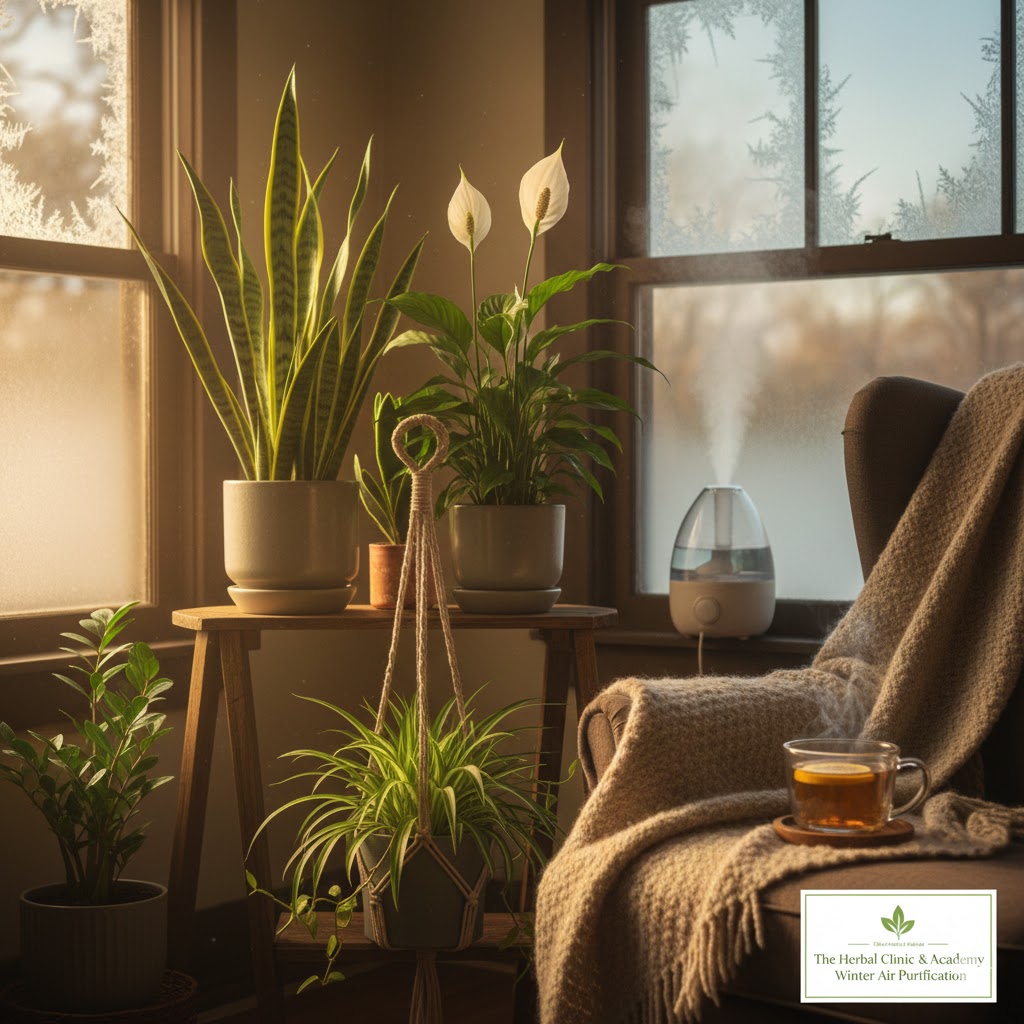

Winter often brings a welcome pause from outdoor allergens, but it also creates a new challenge: poor indoor air quality. As temperatures drop, windows stay closed, ventilation decreases, and indoor pollutants begin to build up. For many households, this leads to dry air, headaches, fatigue, sinus irritation, and worsening respiratory or skin conditions.
One simple and natural way to support healthier indoor air during the colder months is by incorporating indoor plants. At The Herbal Clinic and Academy, natural solutions like plants are often recommended as part of a holistic approach to wellness, especially during winter when indoor environments have a greater impact on overall health.
Why Winter Indoor Air Quality Matters
During winter, homes and offices become sealed environments. While this helps retain heat, it also traps airborne contaminants such as:
- Dust and dust mites
- Chemicals from cleaning products, dryer sheets, etc.
- Mould spores from damp areas
- Pet dander
- Carbon dioxide buildup due to limited airflow
Dry air from heating systems can further irritate the respiratory tract, skin, and eyes. Over time, your energy and concentration levels may drop, you may notice your allergies become aggravated, and your skin becomes itchy – not only due to dryness but due to the lack of clean air.
How Plants Improve Indoor Air Quality
Indoor plants support air quality in several important ways:
Natural Air Filtration
Plants absorb airborne toxins through their leaves and roots, helping reduce indoor pollutants.
Increased Oxygen Levels
Through photosynthesis, plants release oxygen and help balance indoor carbon dioxide levels.
Humidity Regulation
Plants release moisture into the air, which helps counteract the dryness caused by forced-air heating.
Psychological Benefits
Greenery indoors has been shown to reduce stress, improve mood, and enhance mental clarity—benefits that are especially valuable during darker winter months.
Best Plants for Winter Air Quality
Not all houseplants are equally effective or easy to maintain in winter. The following plants are well-suited for indoor environments and require minimal care.
Snake Plant (Sansevieria)
The snake plant is one of the most resilient indoor plants and an excellent choice for winter.
Benefits:
- Helps remove toxins in the air
- Releases oxygen at night, making it ideal for bedrooms
- Thrives in low light and dry indoor air
This plant is well-suited for busy households or offices with limited sunlight.
Peace Lily (Spathiphyllum)
Peace lilies are popular for both their air-purifying qualities and their elegant appearance.
Benefits:
- Helps reduce mold spores in the air
- Filters common indoor pollutants
- Adds moisture to dry indoor environments
Peace lilies prefer moderate light and consistent watering, making them suitable for living rooms and offices.
Areca Palm
The areca palm is an excellent natural humidifier and works well in larger indoor spaces.
Benefits:
- Increases humidity levels
- Supports oxygen circulation
- Helps improve overall indoor comfort
This plant thrives in bright, indirect light and requires regular watering.
Spider Plant (Chlorophytum)
Spider plants are easy to grow and ideal for households with pets.
Benefits:
- Helps reduce carbon monoxide
- Adapts well to indoor winter conditions
- Requires minimal maintenance
Spider plants work well in kitchens, bedrooms, and home offices.
English Ivy
English ivy is especially helpful in reducing airborne mould and allergens.
Benefits:
- Supports respiratory health
- Helps reduce indoor mould levels
- Thrives in cooler indoor temperatures
This plant is well-suited for bathrooms or areas with higher humidity.
Plants and Winter Wellness
Improving indoor air quality is about more than comfort. Clean air supports immune function, sleep quality, and mental clarity—three areas that often struggle during winter. Cleaner indoor air has been shown to help reduce the overall stress load on the body. When combined with proper nutrition, hydration, and lifestyle habits, plants can become part of a broader wellness strategy rather than a decorative afterthought.
Tips for Maximizing Air Quality Benefits
To get the most out of indoor plants during winter, consider the following tips:
- Use multiple plants throughout the home rather than relying on one
- Wipe leaves regularly to prevent dust buildup
- Avoid overwatering, which can lead to mould growth
- Place plants near areas where you spend the most time
- Combine plants with regular ventilation when possible
While indoor plants offer meaningful benefits, they are just one step in improving air quality during winter months, alongside optimizing ventilation, controlling humidity, and addressing indoor pollution sources. Plants work best as part of a layered approach to indoor air quality, and for individuals with chronic respiratory conditions or chemical sensitivities, additional support may be needed, such as
- Reducing chemical-based cleaners
- Using air purifiers when appropriate
- Supporting respiratory health nutritionally
- Managing indoor humidity levels
A Natural Approach to Winter Indoor Health
Winter places unique demands on the body, and the quality of the air you breathe indoors plays a larger role than many people realize. Adding the right indoor plants can support cleaner air, better humidity, and a more calming living environment during the colder months.
At The Herbal Clinic and Academy, simple, nature-based strategies like incorporating indoor plants are often encouraged alongside personalized care. Small changes to your indoor environment can have a meaningful impact on how you feel throughout winter—helping you breathe easier, sleep better, and feel more balanced until spring returns.



0 Comments