

Post-traumatic stress disorder (PTSD) is a mental health condition that’s caused by an experiencing an extremely stressful or terrifying event — either being part of it or witnessing it. Symptoms may include flashbacks, nightmares, severe anxiety and uncontrollable, repetitive thoughts about the event.
Most people who go through traumatic events may have a hard time adjusting and coping for a short time, but in time they can usually let go. If the symptoms last for months or years, however, affecting one’s ability to function without being able to come to terms with the lingering emotions, they may have PTSD.
Post-Traumatic Stress Disorder (PTSD) can affect not just the mind, but the nervous system, digestive system, immune system – the whole body, in fact. Left untreated, it can have a profound effect on a person’s life and can lead to anger, aggression, withdrawal, an inability to maintain relationships, mistrust, and isolation. Getting treatment after PTSD symptoms arise can be very important.
At The Herbal Clinic & Academy, I believe that proper recovery begins with understanding the whole person—mind, body, and spirit—and restoring natural balance through holistic care. Mental health experts that specialize in PTSD can be a person’s saviour, as can medications and plant-based natural therapies.
Herbal medicine offers a gentle, effective way to support emotional resilience, calm the nervous system, and heal the body.
Understanding PTSD from a Physiological Perspective
PTSD is more than emotional pain—it’s the body’s continued reaction to danger long after the event has passed. The brain’s alarm system stays “switched on,” keeping cortisol and adrenaline levels high. This can lead to anxiety, sleep issues, low energy, diminished resistance to infection, and difficulty feeling grounded or safe.
From a holistic standpoint, trauma disrupts the flow of life energy, creating imbalances in all body systems. Herbal medicine aims to restore harmony by supporting these systems, helping the body return to a state where it can process and deal with the incident in a more constructive manner.
Herbal Allies for Trauma and Emotional Healing
For centuries, herbs have been used to soothe the mind and strengthen the heart. Below are some of the key herbs practitioners often recommend for PTSD—each chosen for its ability to calm, ground, and nurture.
Ashwagandha (Withania somnifera)
A cornerstone of Ayurvedic medicine, ashwagandha is known as an adaptogen—an herb that helps the body adapt to stress. It balances cortisol, reduces anxiety, and promotes restful sleep. Over time, it can help the nervous system relearn how to relax and recover.
St. John’s Wort (Hypericum perforatum)
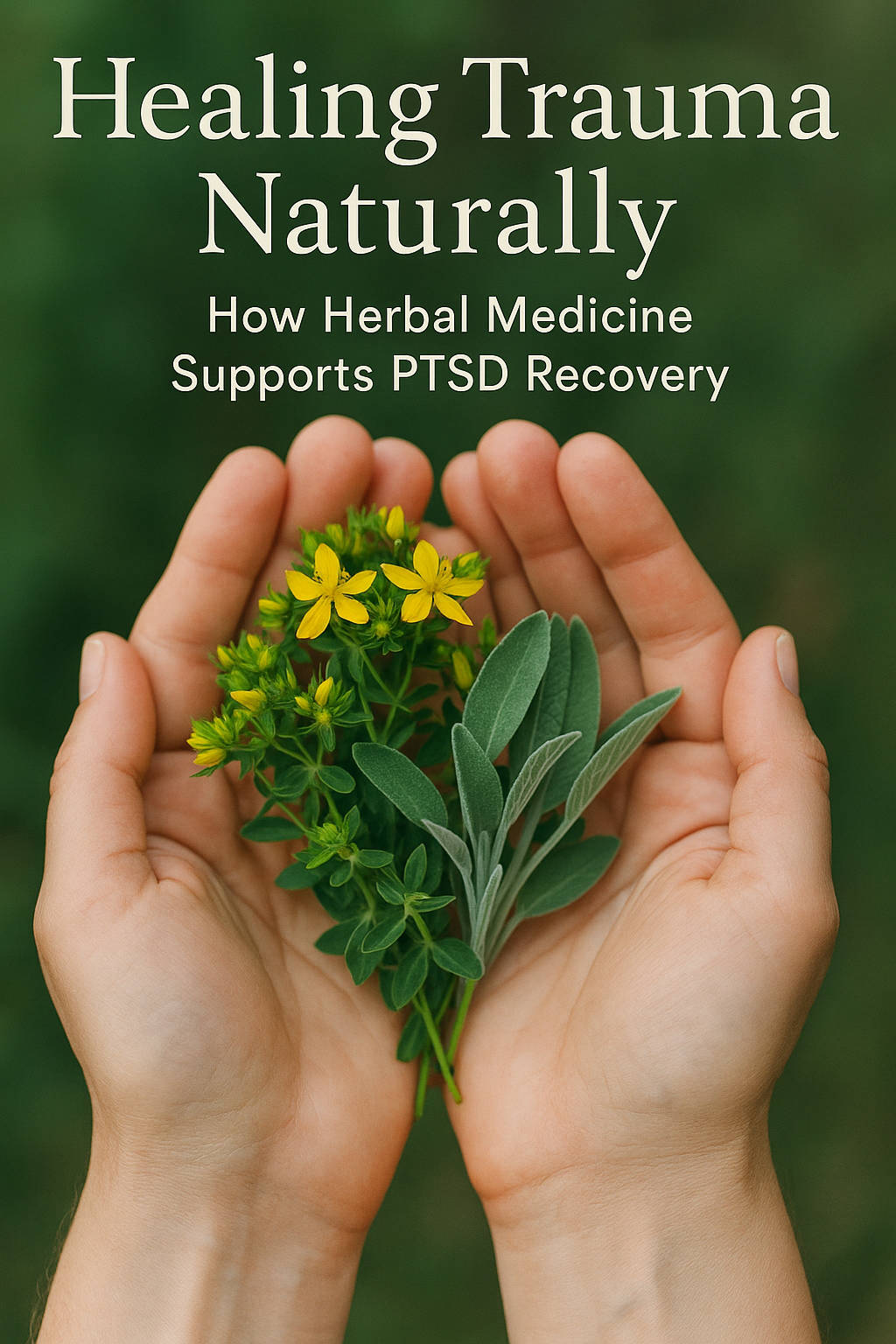
This bright yellow flower has long been used to lift the mood and ease mild to moderate depression, while at the same time nurturing and restoring the nervous system’s function. For those with PTSD who experience emotional heaviness or fatigue, it can offer lightness and renewed energy. However, it should be used under professional supervision, as it interacts with certain medications.
Chamomile (Matricaria chamomilla)
A beloved herbal classic, chamomile soothes both the stomach and the soul. Its calming compounds help reduce restlessness, ease digestion (often affected by trauma), and help the mind unwind. A warm cup of chamomile tea can be a daily ritual of peace.
Passionflower (Passiflora incarnata)
For racing thoughts and insomnia, passionflower works wonders. It quiets mental chatter, encourages deep rest, and restores the body’s natural rhythm of relaxation. It’s beneficial for people who struggle to “switch off” at night.
Rhodiola (Rhodiola rosea)
Known as the “golden root,” Rhodiola helps improve focus, resilience, and emotional stability. It regulates mood-related neurotransmitters and provides gentle energy without overstimulation—it is the ideal herb for those feeling drained by chronic stress.
Lemon Balm (Melissa officinalis)
This aromatic herb has a soft yet powerful calming effect. Lemon balm uplifts mood, reduces irritability, and relaxes the body. It’s also a favourite for promoting emotional comfort during periods of transition or healing.
Mimosa (Albizia lebbeck)
Often referred to as ‘the happiness tree,’ Albizia balances responses from the sympathetic (fight-or-flight) and parasympathetic (rest and digest) nervous systems. It is often given for those with ‘grief that won’t let go.’
Skullcap (Scutelleria lateriflora)
Possibly the best nervine for cyclical thinking. It helps calm the mind to allow for clearer thinking, and is great for those who cannot sleep due to repetitive thoughts.
Why Work with a Clinical Herbalist
Because PTSD affects every individual differently, herbal therapy should always be personalized. At The Herbal Clinic & Academy, I design customized formulas based on your emotional patterns, stress levels, physical health, and current medications. This ensures both safety and effectiveness. I work with clients to find an individualized blend that will address their specific needs, combining remedies with nutritional guidance and mindful practices where needed. Over time, clients often notice improved sleep, fewer anxious thoughts, and a renewed sense of stability.
If you’re already receiving counselling or therapy, herbal medicine can complement that work beautifully—offering the body the calm it needs to integrate emotional healing.
Returning to Balance, Naturally
Recovery from PTSD is not about forgetting—it’s about restoring harmony and reclaiming your sense of safety. Healing from trauma is not linear—it’s a journey that requires patience, compassion, and gentle consistency.
I invite you to experience the restorative power of plants and rediscover inner peace through holistic care. Together, we can create a healing plan that can restore your life.

0 Comments