
PARTS USED:
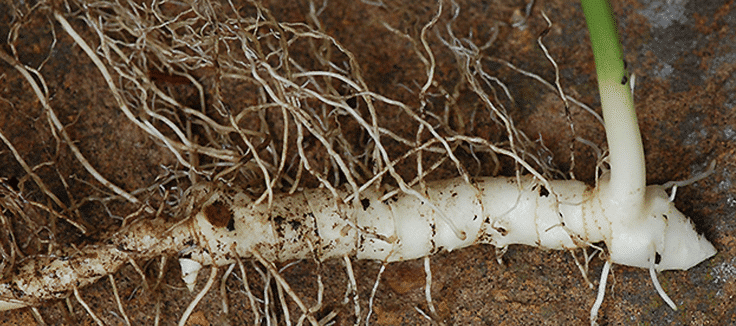
- Root/Rhizome
USES:
Primary use is for Musculoskeletal
- Repairs and tones weak, damaged joints, tendons, ligaments, muscles, discs, vertebrae
- The only true musculoskeletal soother – lubricates all connective tissues and muscles, synovial cartilage, etc.
- Carpal tunnel, rotator cuff, ACL injuries, tennis elbow, UCL injuries, bunions, bone spurs
- Restorative, nourishing, soothing, moisturizing, lubricating tonic
- Good for arthritis
- Great for repetition/stress injuries
- Anodyne
Restores proper tension to connective tissues, lung tissue, the GI tract, Reproductive system, trachea, etc. – tones or relaxes, depending on what’s needed
Respiratory Demulcent
- Restores moisture to dry, irritated throat and upper airways
- Helps loosen secretions or dry up secretions – whatever is needed
Cardiac
- Helps with connective tissue supporting the heart, valve tissue
- Mild cardioactive/inotrope – CHF
- Circulatory Stimulant – opens capillary beds
- Cardiac anti-inflammatory (endocarditis, pericarditis)
- Vulnerary for many tissues in the body
GI
- Invigorates, strengthens and tones organs and GI tract
Female Reproductive Support
- Tones mucous membranes
- Prolapse
Anti-inflammatory for many tissues in the body
Relaxing Nervine – Soothes and eases nervousness, distress
May help with immune system support
Vulnerary – broken bones, sprains, inflamed tissues, etc
Poultice for bruises, sprains, black eyes
PREPARATION:
- Tea
- Tincture
- Salve or oil
- Compress: Apply tea or warm oil to a compress for ligament/tendon tissues close to surface
- Poultice: Fresh root mashed and applied topically
SIDE EFFECTS AND TOXICITY:
- May potentiate Digitalis (Digoxin) medications
- Large doses may cause gastric upset, nausea and vomiting
- Berries are toxic
MISCELLANEOUS:
- The root and young shoots have been used as food throughout Europe during times of famine, and with Native North Americans as trail food
- In 1597, herbalist John Gerard wrote about Polygonatum biflorum, stating “common experience teacheth, that in the world there is not to be found another herbe comparable to it.”
- It is said that the scar left on the rootstock after the stem dies back resembles the seal that King Solomon used for his magical endeavors
- Be mindful of false Solomon’s Seal, which grows in the same conditions and is often found nearby