
PARTS USED:
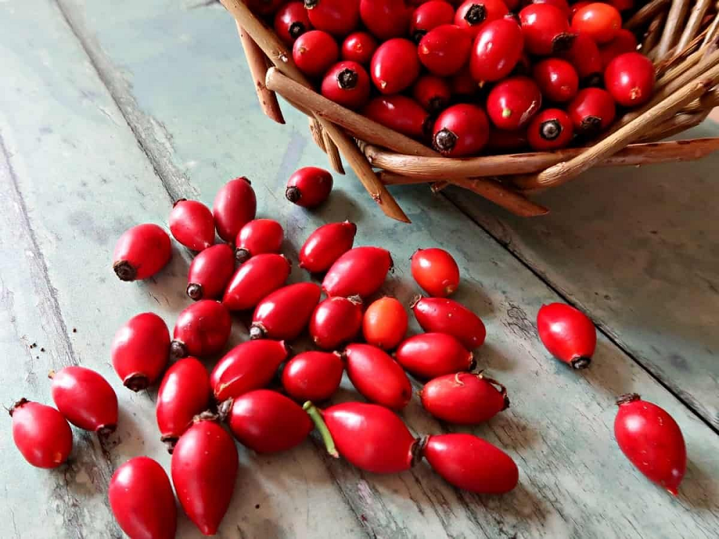
- Berries
USES:
Antioxidant
Anti-inflammatory
- Rheumatoid arthritis
- Osteoarthritis
Anti-obesity (seeds in particular)
Astringent – nosebleeds, etc.
Cardiovascular
- Antioxidants reduce capillary fragility
- Varicose veins (topical or internal)
- Atherosclerosis
- Lipid reduction
- Anticholesterolemic – lowers LDL
- Hypotensive
Integumentary
- Aids in wound healing
- Oils are anti-aging – stops the degradation of skin
- Reduces crow’s feet
- Improves moisture and elasticity
- Stabilizes cell membranes, improving cell longevity
Immune system
- Supports and strengthens; acts as an immune moderator
- Lowers the inflammatory effects of auto-immune conditions
- Prevention and/or support for URTI’s
Urinary
- Diuretic
- Supports and heals after a UTI
- Nephroprotective (studies)
GI
- Coats and protects tissues (Mucilage)
- Good after acute stomach issues or antibiotic use
Respiratory
- Tea is a demulcent for a sore throat (Mucilage)
- URTI
Nervous System
- Vitamin C from fresh rosehips helps support and tone the nervous system and reduce stress
- Neuroprotective
- Antinociceptive/Anodyne
Endocrine
- Adrenal support during stress
PREPARATION:
- Decoction
- Tincture
- Jelly
- Syrup
- Oil
Note:
* Rosehips have tiny hairs inside, which can cause irritation to mucous membranes (mouth,
intestines). It is best to remove the hairs first
SIDE EFFECTS AND TOXICITY:
- None noted
MISCELLANEOUS:
- Used as herbal medicine for more than 2000 years
- Rose hips develop on the rose plant as the flowers drop off
- First described as a medicinal plant by Pliny the Elder (23–79 BC), who encountered its use among Romans in the treatment of dog bites
- Known by sailors as a means of protection against scurvy
- During the Second World War, rose hips were the key source of vitamin C in Britain
- Rose hips vary widely in flavor, color, and size, and the only way to assess your local hips is by taste
- Used by sailors to prevent scurvy
- The best time to pick rosehips is in autumn after the season’s first frost, as the frost makes the sugars more concentrated