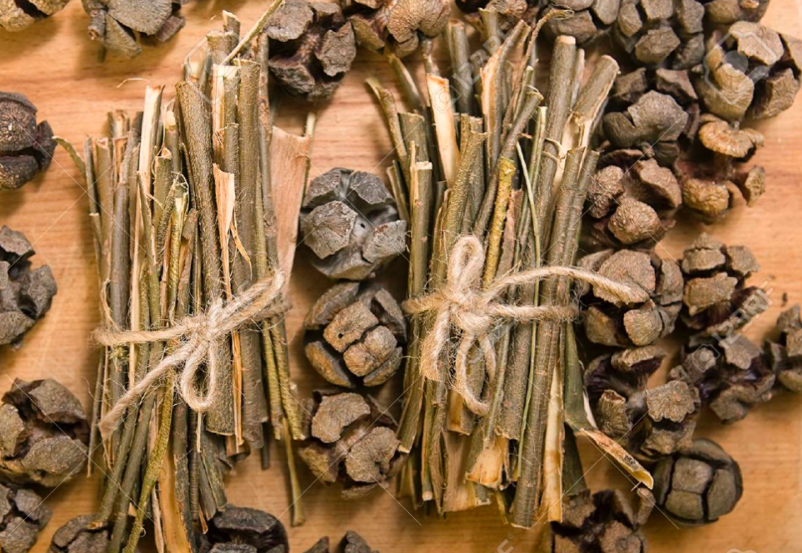

PARTS USED:
- Bark; occasionally leaves
USES:
Salix contains an ingredient called salicin, which your body makes into another chemical substance called salicylic acid. Similar to acetylsalicylic acid (ASA, a synthesized version developed in 1897 by the Bayer company under the name of Aspirin), salicylic acid reduces the production of certain prostaglandins in your nerves, helping to reduce inflammation and its associated pain. Salix likely acts on the thalamus to inhibit the pain response, but it is mild enough and present in low enough concentrations that it does not interfere with the rest of the cortex’s functioning.
Salix’s onset is not as fast as Aspirin but it lasts longer and has no gastric side effects. While it does inhibit platelet aggregation in higher doses, it does not do so as much as aspirin.
It is interesting to note that the body’s natural conversion of salicin to salicylic acid happens in the colon, and therefore does not cause the stomach upset/ulcers that are possible when taking salicylic acid by mouth, thereby allowing it come into contact with the stomach/small intestine.
Anti-inflammatory/Analgesic
- Rheumatism
- Rheumatoid Arthritis
- Gout
- Arthritis
- Headache
- Lower back pain (studies show low doses are not effective here)
- Osteoarthritis (particularly hip and knee; requires approx. 6 weeks of treatment to be effective; works best in mild pain scenarios; not as effective in cases with severe pain)
- Ankylosing spondylitis
- Tendonitis
- Sciatica
- Neuralgia
- Osteoporosis
- Varicose veins
- Dental work (cleaning, etc. – Salix is antibacterial against dental biofilm)
Antipyretic
- Colds, flu
GI
- Dyspepsia
- General digestive debility
- Chronic diarrhea and dysentery
Insomnia (leaf infusion)
Anti-cancer
- 70% alcohol extract very effective against AML (Acute Myeloid Leukemia)
Anthelmintic
Topical
- Psoriasis
- Cuts, sprains
- Corns
- Poison ivy
Disease prevention – delays cataracts and lowers risk of heart disease (clinical studies)
Antibacterial
- Most effective against Pseudomonas aeruginosa
- Effective against Staph aureus, Bacillus, Streptococcus mutans, Lactobacillus, Salmonella, E. coli
- Effective against Gram negative and Gram positive
PREPARATION:
The effective dose is 60-120mg/day, up to 240mg/day for more acute pain
- Decoction
- Tincture
- Bathwater – Pour decoction into bathwater for a relaxing, pain-relieving soak
SIDE EFFECTS AND TOXICITY:
- Limit treatment to 4-6 weeks, then take a break
- Monitor if gastric ulcers are present – theoretically should not exacerbate the condition (if it does, consider avoiding tincture/alcohol form)
- Avoid in people with ASA allergies
- Reduce dosages in those with liver impairment
- Monitor closely if taking
- Other salicylate-containing products
- Alcohol
- Barbiturates/sedatives
- NSAIDs
- Anticoagulants
- Spironolactone
- Anticonvulsants – Phenytoin, Valproates
- Methotrexate
- Toxicity occurs if there is liver impairment. Overdose symptoms:
- Nausea/vomiting
- Skin rash
- Tinnitus
- Dizziness
- Tachycardia
- Theoretically may cause Reye’s Syndrome in children (although no studies have proven this)
MISCELLANEOUS:
- One of the first herbs to be scientifically investigated
- Bark is best collected when the sap is flowing
- Salix was widely used in Arabic medicine – edema, jaundice, hemoptysis, skin tumours, dandruff, hair loss
- Medieval European guidelines recommended Salix for colds, fever, and wound abscesses, rheumatism
- Not a valuable source of natural salicylic acid due to its economically disadvantageous process
- Pollen from the White Willow tree can reduce damage to chromosomes caused by certain anti-cancer drugs (Mytomycin C, Bleomycin, Vincristine)
- Native Americans used to use willow poles with their bark intact, bent and tied, when building their vapour lodges
- The willow was mystically connected with the departure of the spirit at death – therefore, willow twigs were used in funeral rites