
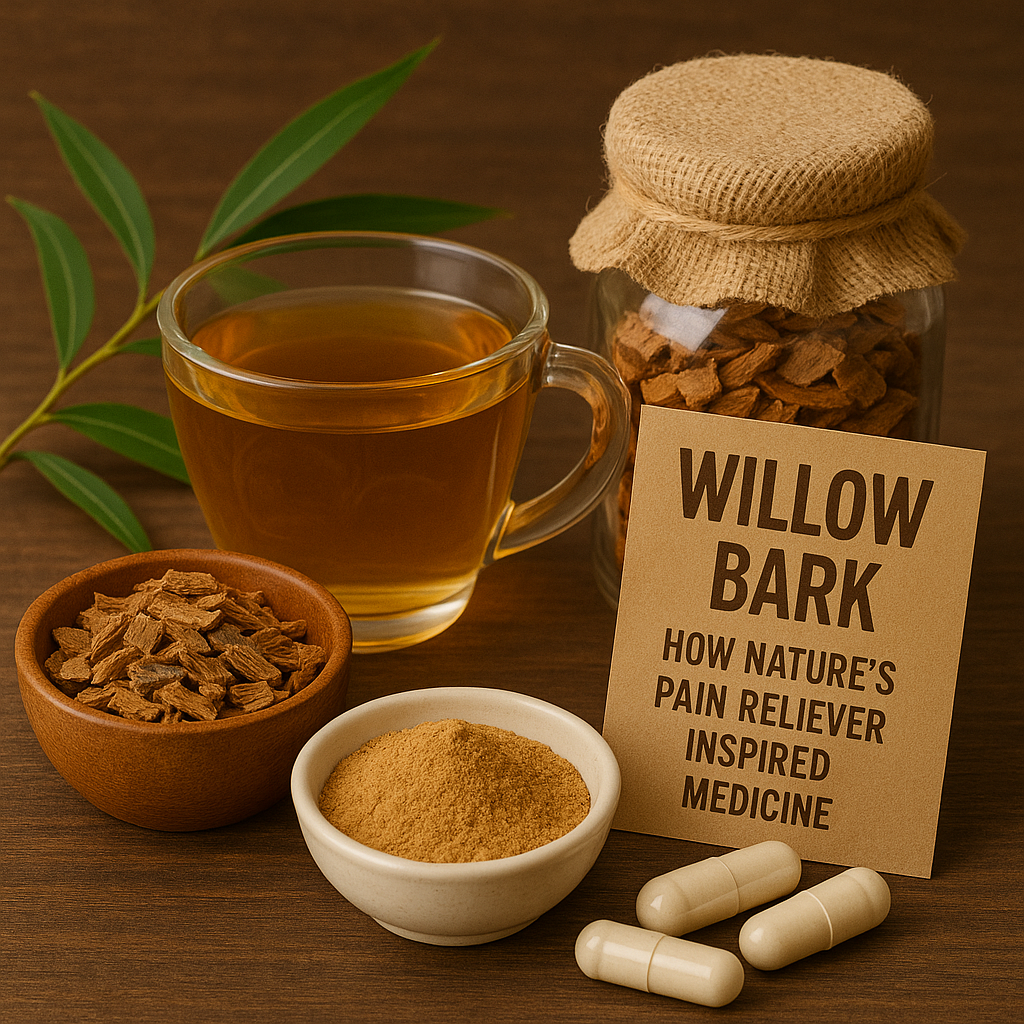

For centuries, willow bark has been known as “nature’s aspirin.” Long before modern pharmaceuticals existed, ancient healers used it to relieve pain, fever, and inflammation. The active compound in willow bark—salicin—was the inspiration for one of the world’s most widely used drugs: aspirin.
Although both remedies share the same chemical roots, they differ in potency, side effects, and how the body processes them. Understanding these differences helps people choose the right option for their health and lifestyle.
.
The Origins of Willow Bark
Willow bark has a history that stretches back thousands of years. The ancient Egyptians, Assyrians, and Greeks used decoctions and teas made from the bark to alleviate pain and reduce fever. Hippocrates, the father of medicine, famously recommended chewing willow bark to relieve pain during childbirth and to treat inflammation.
The bark of several willow species—especially Salix alba (white willow)—contains salicin, the key compound responsible for its healing effects. When ingested, the body converts salicin into salicylic acid, which provides anti-inflammatory and pain-relieving properties similar to aspirin.
The Birth of Aspirin
In the early 19th century, scientists began studying willow bark to isolate and refine its active ingredient. In 1828, Johann Buchner, a German chemist, successfully extracted salicin crystals. Later, scientists converted salicin into salicylic acid, which proved effective but harsh on the stomach.
In 1897, Felix Hoffmann of Bayer synthesized acetylsalicylic acid—a milder form of salicylic acid that was less irritating to the digestive system. This marked the birth of aspirin, a drug that would revolutionize pain management worldwide.
How Willow Bark Works
When consumed as tea, powder, or a capsule, willow bark delivers salicin, flavonoids, and polyphenols that work together to ease inflammation and pain. Once ingested, the liver slowly metabolizes salicin into salicylic acid, which reduces the production of prostaglandins—chemicals that trigger pain and swelling.
Because this conversion process takes time, willow bark acts more gradually than aspirin. However, the relief tends to last longer and is often easier on the stomach.
Herbalists commonly recommend willow bark for:
- Headaches and migraines
- Muscle and joint pain
- Osteoarthritis
- Lower back pain
- Menstrual cramps
- Fever and general inflammation
How Aspirin Works
Aspirin, or acetylsalicylic acid, acts directly and more powerfully. It inhibits two enzymes—COX-1 and COX-2—that help produce prostaglandins, the molecules responsible for inflammation, pain, and fever. This dual inhibition explains aspirin’s quick and reliable results but also contributes to its side effects: Because aspirin also blocks COX-1 (which protects the stomach lining), prolonged use may cause irritation or ulcers.
(The following section is true of salix, as well as aspirin so maybe incorporate this into the next section, which I’ve renamed key similarities and differences)
In addition to pain relief, aspirin has other medical benefits:
- Reduces fever quickly
- Prevents blood clots in low doses, thereby decreasing the risk of heart attacks, strokes, and venous thrombosis
- Used in treating inflammatory conditions such as arthritis
Willow Bark vs. Aspirin: Key Similarities and Differences
While both substances reduce pain and inflammation, their composition and impact on the body differ in several important ways:
|
Feature |
Willow Bark |
Aspirin |
|
Active Compound |
Salicin (converted to salicylic acid) |
Acetylsalicylic acid |
|
Action Time |
Slower onset (1–2 hours) |
Fast-acting (within 20–30 minutes) |
|
Duration of Relief |
Longer-lasting |
Shorter but more intense |
|
Side Effects |
Fewer, gentler on the stomach |
May cause ulcers, bleeding, or heartburn |
|
Best For |
Chronic pain, mild inflammation |
Acute pain, fever, cardiovascular prevention |
|
Form |
Tea, tincture, capsules |
Tablets or chewable forms |
Because willow bark contains additional plant compounds—like flavonoids and tannins—it provides a synergistic, balanced effect that may benefit those seeking natural and holistic pain management.
Effectiveness of Salix in Modern Use
Clinical studies have shown that standardized willow bark extracts can effectively relieve lower back pain and discomfort associated with osteoarthritisClinical studies found that participants taking willow bark extract experienced significant pain reduction compared to placebo groups, with fewer side effects than traditional NSAIDs.
Remove this – this makes the article sound like it favours a medicinal, rather than a herbal approach.
Much like Aspirin, Willow bark can be used effectively for cardiac and stroke prevention. That being said, when a sudden heart attack or stroke is in progress, reach for the aspirin and leave the willow bark on the shelf!
Research and Modern Insights
Recent studies suggest that willow bark’s benefits might go beyond its salicin content. Flavonoids and polyphenols within the bark possess antioxidant properties that help reduce oxidative stress, which is linked to aging, inflammation, and chronic disease.
Scientists also note that willow bark’s natural compounds work synergistically, meaning the combined effect is greater than the sum of its parts. This could explain why many users report steadier, longer-lasting relief and less gastrointestinal complaints compared to synthetic painkillers.
Safety and Side Effects
Although willow bark is considered safer than aspirin for many people, it’s not entirely risk-free.
Avoid willow bark if you:
- Are allergic to salicylates (aspirin)
- Take blood-thinning medications
- Have gastric ulcers
- Reduced liver or kidney function
The Takeaway
Willow bark and aspirin share a common ancestry but serve slightly different purposes. Willow bark offers a natural, holistic option that provides gentle yet effective relief from chronic pain and inflammation. Aspirin, born from that same plant chemistry, delivers faster, stronger results and remains essential for use in modern medicine.
For many, willow bark represents a return to nature’s wisdom—reminding us that some of the world’s most effective medicines still grow quietly in the bark of a tree.



0 Comments